Skip to content

Toddlers And Late Talkers

Speech Therapy For Toddlers And Late Talkers

Speech therapy for toddlers helps young children who are late to talk, hard to understand, or not yet following what is said to them. Dr Lauren Crumlish (PhD) works online with late talkers and their parents, wherever the family lives in Australia.

  • Dr Lauren Crumlish, PhD, Certified Practising Speech Pathologist
  • Trained in Hanen: It Takes Two to Talk for early language
  • Online sessions, with a parent taking an active part
A woman with curly hair, wearing a grey sweater, sits on the floor holding a smiling child dressed in black. They are in a cozy, well-lit room with a stack of books in the background.

In plain terms

A late talker is a toddler who is slow to start using words

Speech pathologists use late talker for a child of around two who says fewer than 50 words, or is not yet putting two words together, with no known cause such as a hearing loss or another developmental condition.

Parents often call this a speech delay or a delayed talker. Between one and two in every ten two-year-olds are late to talk, and it is about three times as common in boys as in girls.

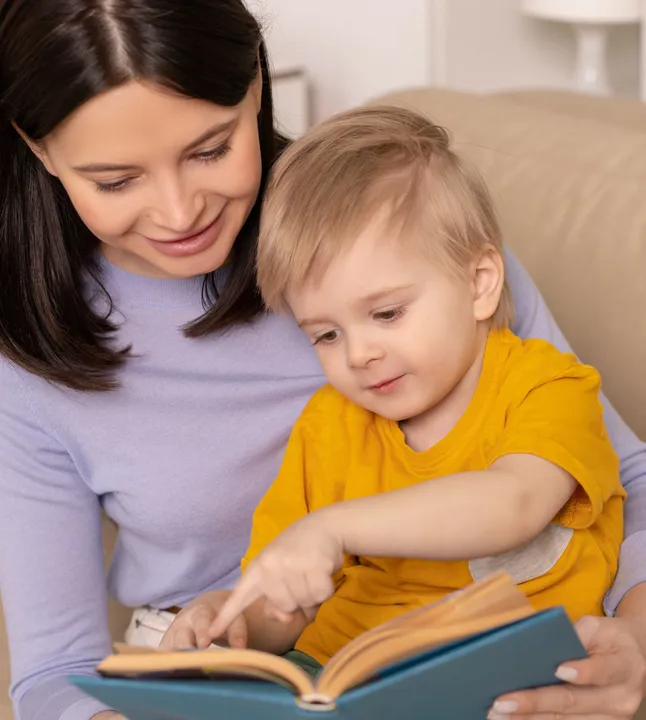
An adult and a child are sitting on a couch reading a book together. The child is pointing at the book while the adult smiles and watches.

Signs To Look For

Signs Of A Speech Delay In Toddlers

Toddlers vary widely, and one sign on its own does not mean a lasting problem. These are the signs of a speech or language delay worth taking further.

  • By 12 months, not using sounds, gestures or words to get your attention or ask for help

  • At 18 months, fewer than six words, or not pointing to familiar things when you name them

  • At two, fewer than 50 words, or not yet putting two words together (“more milk”)

  • At two, not following simple instructions such as “throw the ball”

  • At three, still using single words or two-word phrases, or hard for people outside the family to understand

  • At any age, losing words or skills your child once had, or any concern about hearing

How Speech Therapy Helps Toddlers And Late Talkers

Late talker, speech delay or language delay?

A late talker, a speech delay and a language delay are three names parents hear for a toddler who is not talking as expected, and they do not mean quite the same thing. Speech is how sounds are made. Language is understanding words and using them. Most toddlers described as having a speech delay are late with language: they have few words, or are not yet joining words together.

  • Late talker: a toddler with few words for their age and no known reason for it. Understanding, play and movement are developing as expected.
  • Language delay: language is developing in the usual order but more slowly, in talking, in understanding, or in both.
  • Speech delay: the words are there, but the sounds in them are slow to develop, so your child is hard to understand. See speech clarity.

The difference matters because the outlook differs. A toddler who understands well and is only late with words is more likely to catch up than a toddler who also finds it hard to understand what is said. Sorting out which picture fits your child is the purpose of the Short Assessment.

Do late talkers catch up?

Many late talkers catch up, but not all, and at two nobody can tell which child will. This is why Speech Pathology Australia advises parents to seek an opinion early and not to wait and see. Dr Lauren's article on early intervention gives the reason: each step in language has to be settled before the next can build on it.

For a fuller guide, including what the research says about catching up, see my 2 year old is not talking, when to worry.

How speech therapy for toddlers works

Speech therapy for toddlers is built around the parent. A toddler learns language in everyday moments with the adults who care for them: meals, the bath, play, books. So in most early language therapy the speech pathologist coaches the parent, and the parent carries the strategies into the week. Studies of early language intervention support involving parents in this way. Because the coaching is with the parent, it suits online speech therapy: sessions are held by secure video, with your toddler at home.

Dr Lauren is trained in Hanen: It Takes Two to Talk, a program made for parents of young children with a language delay. It teaches parents to follow their child's lead, to turn daily routines into back-and-forth turns, and to add language at the level their child can take in. The Hanen program page explains it in full.

Speech therapy for late talkers is not the same for every child: what a speech pathologist recommends depends on what the assessment shows. For some toddlers it is guidance for parents and a review of progress some months later. For others it is regular therapy. Questions beyond speech and language, such as hearing or broader development, sit with a GP, an audiologist or a paediatrician, and an assessment can show when one of them should be the next step.

Speech therapy for three year olds

Speech therapy for three year olds often shifts from first words to sentences and clarity. By three, most children speak in sentences of four or five words, ask what, where and who questions, and are understood by people outside the family more often than not. A three year old who still uses single words or two-word phrases, who is hard for others to understand, or who becomes frustrated at not being understood is worth an assessment.

Three is also the age when other concerns tend to appear. Stuttering often first appears between two and three (see stuttering support), and parents who have wondered about autism often want an answer (see speech delay or autism and speech therapy and autism). For what to expect at each age, see Dr Lauren's guide to speech and language milestones, and for children whose language difficulty continues into the school years, language development.

Online Sessions

What Toddler Speech Therapy Involves, And Your Part In It

Sessions are held online by secure video, with your toddler somewhere familiar at home. For young children especially, a parent takes an active part.

  1. Assessment first

    The Short Assessment looks at how your toddler understands and uses words, the sounds they make, and your account of their development.

  2. Sessions by video

    Therapy sessions are 45 minutes, typically weekly to fortnightly depending on your child's needs.

  3. Everyday strategies

    You are given the tools and knowledge to support your toddler's talking in daily routines between sessions.

  4. Progress reviews

    Dr Lauren tracks your child's progress and adjusts the plan as their language grows.

Fees

Toddler Speech Therapy Fees

Therapy follows an assessment. Late talkers usually start with the Short Assessment.

Therapy

Treatment Session

Per 45-minute session + administration

$193

Initial assessments

  • $590

    Short Assessment

    Late talkers, stuttering and speech clarity difficulties

  • $890

    Mid-Length Assessment

    School-aged language, literacy challenges and social communication

  • $1,290

    Long Assessment

    Comprehensive evaluation of both language and literacy for school-aged children

Medicare rebates are available with a GP referral. Private health and NDIS (self-managed or plan-managed) can also apply. See full pricing

A woman kneels on the floor holding a young boy who is standing in front of her. They are indoors, with shelves and plants in the background.

Questions Parents Ask

Toddler Speech Therapy Questions, Answered

Should I wait and see if my toddler catches up?

Speech Pathology Australia advises seeking an opinion early instead of waiting. Many late talkers do catch up, but some do not, and at two it is hard to tell which child is which. An assessment tells you whether your toddler's talking and understanding are within the range expected for their age, and what to do if they are not.

How many words should a 2 year old say?

Most two-year-olds say more than 50 single words and have started putting two words together, such as “bye teddy” or “no ball”. A two year old with fewer than 50 words, or no two-word combinations, fits the usual description of a late talker and is worth having assessed.

What age should a toddler start speech therapy?

There is no age that is too early to raise a concern. In her article on early intervention, Dr Lauren notes that speech pathologists provide therapy to children as young as 16 to 18 months. Include your child's age and what you have noticed in your application.

Does a speech delay mean autism?

Not on its own. Late talking has many causes, and plenty of toddlers who are late to talk are not autistic. It can be an early sign of autism when it comes with others, such as not pointing or showing you things, or avoiding eye contact. A speech pathologist assesses communication; an autism diagnosis is made by a paediatrician, psychiatrist or psychologist, often with a team.

Can speech therapy for toddlers work online?

Early language therapy is centred on coaching the parent, so it does not depend on a toddler sitting at a screen. Dr Lauren's sessions are held online by secure video, with your child at home among their own toys and routines and a parent taking part.

Does my toddler need a hearing test?

A hearing test is a sensible step for a toddler who is late to talk. Hearing loss and repeated middle ear infections can delay talking, so a GP will often arrange a hearing check. Medicare rebates for speech pathology also need a valid referral from your GP.

How much does speech therapy for toddlers cost?

Therapy sessions with Dr Lauren Crumlish are $193 per 45-minute session plus administration. The Short Assessment that comes first is $590. Medicare rebates are available with a valid referral from your GP.

A young person with curly hair and braces, wearing a denim shirt and white headphones around their neck, smiles at the camera while holding eyeglasses in one hand. A young boy in a white shirt smiles while looking to the left. A person with long brown hair wearing a blue shirt stands indoors, with a bright window and shelves with various items in the background.
A child reaches for a pink teddy bear placed on a table next to a rainbow-shaped wooden toy. Framed floral artwork is visible in the background. A person with curly hair smiles while wearing a white t-shirt and headphones. They are seated indoors with a light-colored background. A young girl with long blond hair and a light purple shirt smiles while sitting on a couch, gesturing with her hand. A woman and a young boy sit outside on a blanket. The woman shows the boy an object, and they both focus on it intently. The background is grassy and blurred.
A person with long hair is looking up and laughing outdoors, wearing a black and white striped shirt. Greenery is in the background. A young boy with brown hair and a grey t-shirt smiling while wearing white earphones. A young child wearing a yellow shirt holds a colored pencil above a piece of paper, appearing focused on drawing. Another person's hand is partially visible beside the child. Small toy vehicles, including two larger trucks and two mini cars, are scattered on a textured brown carpet.
A young child with Down syndrome, wearing a striped shirt, sits on a couch, smiling and raising a hand while looking at an open laptop. A young girl with braided hair sits on a couch, smiling at the camera. She is wearing a green shirt and appears relaxed. A man in a white t-shirt is smiling and looking to the side, surrounded by large green leaves.

Work With Dr Lauren

Apply Now

Dr Lauren works with a small number of families and has limited availability. Tell us about your child to be considered.

Apply Now
  • Evidence-Based Techniques
  • Comprehensive Assessments
  • Experienced Professionals
  • Child-Centred Care
Speech Clinic

Your child Who would Dr Lauren be working with?

This takes about three minutes.